BIGSTORY Network


International News March 9, 2026, 6:51 p.m.

The Fog of Infrastructure War: How the US-Israel Split Over Iran's Oil Burns India

With toxic black rain falling on Tehran and Washington directly questioning Israeli targeting decisions, the ensuing strategic chaos threatens to shatter India's macroeconomic stability.

by Author Sseema Giill
Hero Image

⏱️ 30-Second Brief

Expand to Read

What happened: Israel struck 30 Iranian fuel depots overnight March 7–8 — far beyond what the US was notified about — engulfing Tehran in toxic black smoke, turning the city's rain black, killing four people, and sending Brent crude spiking to $119.50 per barrel. Why it happened: Israel escalated unilaterally on its own timetable, framing the depots as military fuel supply — a justification the US is not publicly endorsing and that Iran calls "intentional chemical warfare." The strategic play: Israel is pursuing an infrastructure war on its own schedule; the US wants to "save the oil"; Iran's Ghalibaf has threatened $200/barrel retaliation on Gulf energy facilities; and the US is now quietly discussing seizure of Kharg Island — Iran's primary oil export terminal — as a leverage tool. India's stake: At $115+ crude, India's annual import bill is over Rs 350 billion above budget assumptions; India's 7–8 week strategic reserve buffer is a holding position, not a solution; and the Rs 60 LPG hike that has already landed on Indian consumers is the opening charge of a war India is not fighting but is fully paying for. The deciding question: Whether Israel's next strike — on Iran's power grid or on Kharg Island — triggers the $200 retaliation Iran has threatened, or whether the US-Israel split on oil infrastructure is the beginning of a strategic brake on escalation.

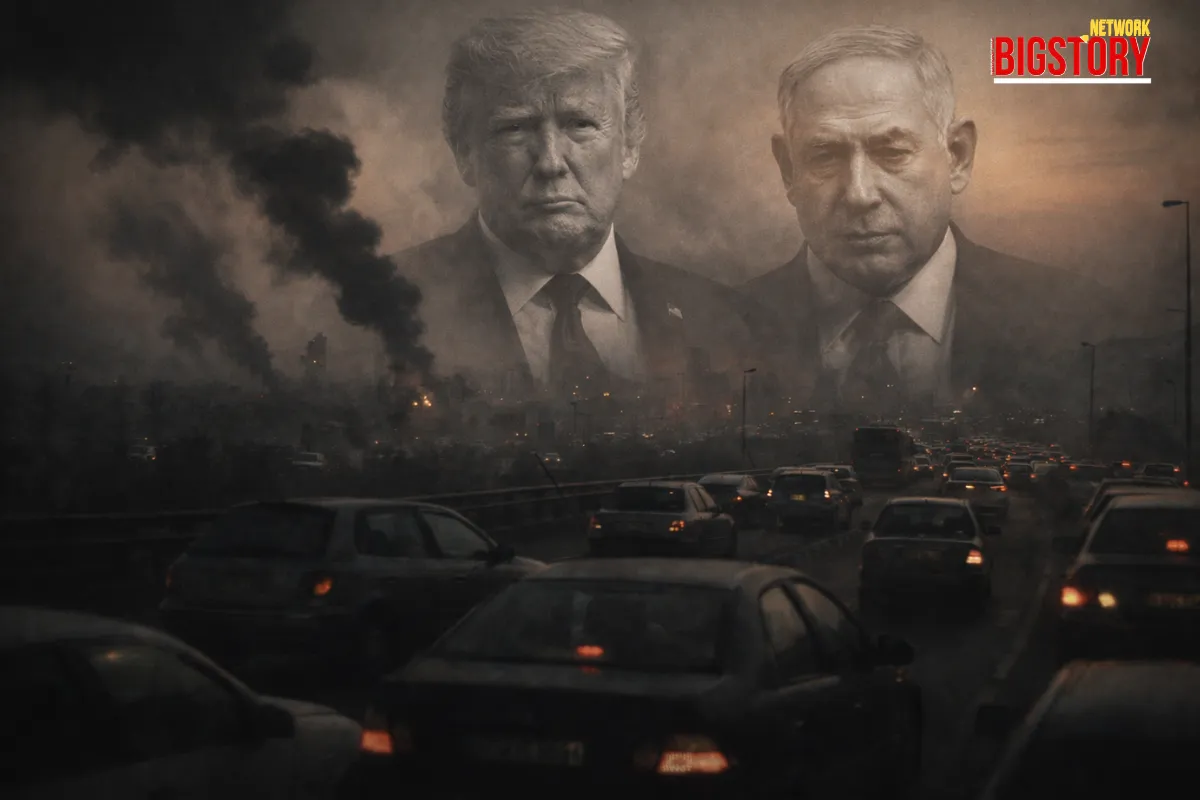
The unprecedented scale of the israel iran oil depot strikes has triggered massive strategic confusion, guaranteeing a severe india oil price impact in 2026 as global energy markets panic. On Saturday night, the Israeli air force obliterated 30 Iranian fuel depots—an operation that went far beyond US notification parameters, fracturing the Washington-Jerusalem consensus and engulfing Tehran's 10 million residents in highly toxic black rain.

This unilateral escalation forces an immediate fiscal crisis for New Delhi. With global oil benchmarks surging past $119 per barrel, the resulting supply shock threatens to add over Rs 350 billion to India's annual import bill, neutralizing the nation's fragile seven-week strategic petroleum reserve and guaranteeing immediate domestic inflation.

How We Got Here

  • The Trigger: Israel strikes 30 fuel depots across the Tehran region and Alborz province overnight on March 7-8, rapidly expanding the conflict beyond purely military and nuclear targets.
  • The Background: The United States explicitly sought to protect oil infrastructure during the first week of the war, reacting with deep dismay—summarized by officials as "WTF"—to the massive scale of Israel's depot destruction.
  • The Escalation: Tehran faces a dire environmental and health catastrophe with highly dangerous acidic black rainfall, prompting Iranian Parliament Speaker Mohammad Bagher Ghalibaf to threaten retaliation against Gulf facilities designed to drive oil to $200 a barrel.
  • The Stakes: Brent crude spiked to $119.50, forcing heavily import-dependent nations like India into a corner as speculation mounts in Washington over a potential military seizure of Iran's Kharg Island export terminal.

The Key Players

Benjamin Netanyahu, Prime Minister, State of Israel Netanyahu authorized a strike package that fractured the US-Israel operational consensus for the first time in ten days. Promising "many surprises" in the conflict's next phase, he is executing a devastating infrastructure war on an independent, unilateral timetable.

Mohammad Bagher Ghalibaf, Speaker, Iranian Parliament The senior hardliner and former IRGC commander established a devastating strategic deterrent. He warned that continued infrastructure attacks will trigger immediate Iranian retaliation against neighboring Gulf states, pushing global oil prices to a catastrophic $200 a barrel.

Hardeep Singh Puri, Union Minister of Petroleum and Natural Gas, India Leading India's energy response, Puri faces a mathematical nightmare. The recent Rs 60 LPG hike forced onto Indian consumers is merely the opening blow of a war that is systematically destroying the Finance Ministry's $70-per-barrel budget assumptions.

The BIGSTORY Reframe — The Four Layers of Confusion

Mainstream coverage fixates on the dramatic images of burning petrochemicals and the immediate market spike. This superficial focus entirely misses the profound strategic chaos defining the conflict—a fractured reality carrying four distinct layers of confusion that directly endanger India. First, the US-Israel split is no longer a tactical disagreement; it is a structural divide. Israel hitting 30 depots after notifying the US of a limited operation signals that Jerusalem is ignoring Washington's demand to "save the oil." However, this specific American discomfort offers New Delhi a vital diplomatic opening to forcefully demand energy de-escalation on humanitarian grounds.

Second, the legal and moral justification for the strikes is fiercely contested. The IDF claims these depots fuel the Iranian military, while Washington fears the civilian fallout, and Tehran denounces the resulting black rain as intentional chemical warfare. Third, Iran's internal command structure remains deeply contradictory. President Masoud Pezeshkian promised Gulf states immunity if they refused to host anti-Iran operations, yet the IRGC aggressively bombed five Gulf nations that exact same night.

Finally, the competing price targets—the Indian Finance Ministry's $70 budget, the market's $119.50 spike, and Ghalibaf's $200 threat—leave economic planners operating entirely blind, unable to secure the floor oil price for the next 90 days.

What This Means for India

  • Fiscal Devastation: India's annual import bill will explode by approximately Rs 350 billion if crude holds above $115, forcing the government to choose between massive, unsustainable subsidy expansions or painful consumer pump price hikes.
  • Strategic Reserve Limits: The Ministry of Petroleum must confront the reality that the Mangalore, Padur, and Visakhapatnam strategic reserves provide only seven to eight weeks of buffer, which is a holding position, not a long-term solution.
  • The Kharg Island Trap: Mounting speculation that the US might seize Iran's Kharg Island terminal offers no relief to New Delhi; such a move would paralyze Iran's exports while keeping the critical Strait of Hormuz dangerously congested and contested for all other Gulf suppliers.

The Implications

  • Short Term: Indian consumers will absorb further fuel and LPG price revisions within 72 hours if global crude benchmarks refuse to retreat reliably below $110.
  • Medium Term: Force majeure clauses in international energy supply contracts will activate across the board, forcing Indian refiners to aggressively hunt for highly expensive spot cargoes.
  • India-Specific Consequence: The diplomatic space for India's strategic autonomy shrinks dramatically; New Delhi must navigate an environment where its primary Gulf Arab energy suppliers are under direct, continuous IRGC bombardment.

If Washington cannot stop Israel from burning Tehran's civilian fuel supply, and the Iranian President cannot stop the IRGC from bombing Gulf refineries, who exactly is in control of the conflict dictating India's economic survival?

How We Reported This

News & Wire Coverage:

Official Statements & Data:


Sseema Giill
Sseema Giill Founder & CEO

Sseema Giill is an inspiring media professional, CEO of Screenage Media Pvt Ltd, and founder of the NGO AGE (Association for Gender Equality). She is also the Founder CEO and Chief Editor at BIGSTORY NETWORK. Giill champions women's empowerment and gender equality, particularly in rural India, and was honored with the Champions of Change Award in 2023.

BIGSTORY Trending News! Trending Now! in last 24hrs

The Fog of Infrastructure War: How the US-Israel Split Over Iran's Oil Burns India
International News
The Fog of Infrastructure War: How the US-Israel Split Over Iran's Oil Burns India
The Recognition Bind: How Iran's IRGC-Backed Succession Forces India into an Impossible Corner
International News
The Recognition Bind: How Iran's IRGC-Backed Succession Forces India into an Impossible Corner
The "False Flag" Defense: Why Iran is Blaming Israel for the Attack on Azerbaijan
International News
The "False Flag" Defense: Why Iran is Blaming Israel for the Attack on Azerbaijan
A "Quiet Death": Inside the Historic Submarine Strike That Split the IRIS Dena
International News
A "Quiet Death": Inside the Historic Submarine Strike That Split the IRIS Dena